PV Facade InstallationDeeside, Flintshire
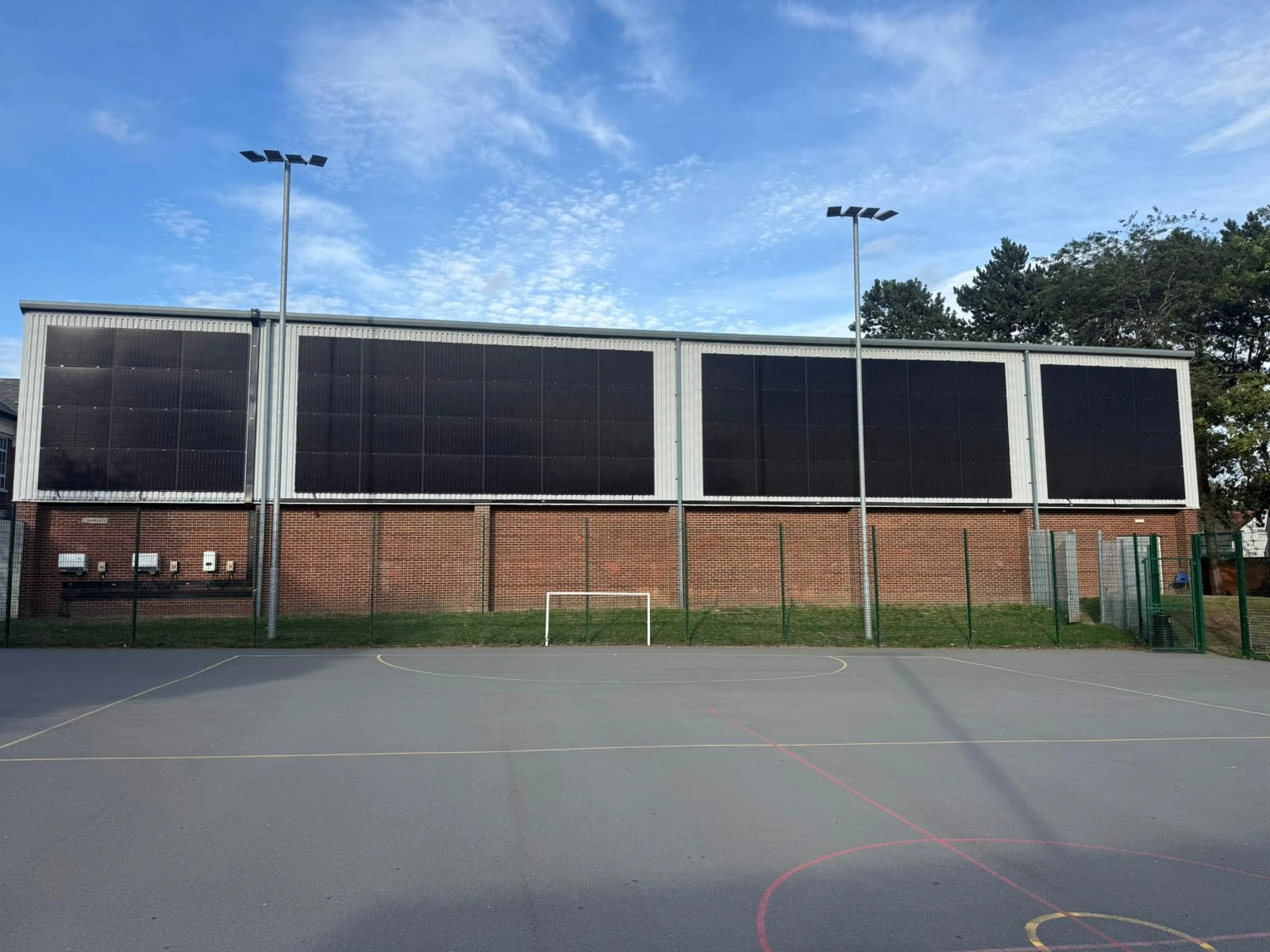
A vertical photovoltaic facade installed across the upper elevation of a sports and leisure building in Deeside. Where the roof wasn't the answer, the wall was — building-integrated PV generating clean electricity from a surface that was previously doing nothing but keeping the weather out.
Project summary
MARA Electrical installed a building-integrated PV facade on a sports and leisure building in Deeside, Flintshire. Photovoltaic panels were mounted vertically across the upper elevation, above the brickwork, so the building generates electricity from its wall rather than its roof — the practical answer where roof space is unavailable or already in use.
- Project PV facade installation — building-integrated photovoltaics
- Building Sports and leisure facility
- Location Deeside, Flintshire, North Wales
- Configuration Vertical PV panels across the upper elevation, above brickwork
- Client Name withheld at the client's request
- Installer MARA Electrical — MCS certified, NICEIC approved, based in Queensferry, Deeside
When the Roof Isn't the Answer
Almost every solar conversation starts with the roof. Sometimes the roof says no. It may already be covered in plant and rooflights, it may not have the structural capacity for a conventional array, it may be shaded, or — as is often the case with sports halls — it may simply be the wrong shape and size for the demand of the building underneath it.
This Deeside sports and leisure building had a large, south-facing upper elevation doing nothing but keeping rain out. A photovoltaic facade turned that wall into a generating asset, with the panels forming part of the building envelope rather than being perched above it.
For a sports and leisure building the timing works particularly well. Lighting, heating and ventilation demand peaks in the darker months, which is exactly when a vertical array performs at its best relative to a pitched roof, because low winter sun strikes a vertical surface much more directly.
Designing and Installing the Facade
Vertical PV brings structural, weatherproofing and electrical considerations that a rooftop array simply does not.
Vertical PV Array
Photovoltaic panels installed across the upper elevation in continuous bays, set within the existing cladding line above the brickwork.
Structural Fixing
Mounting designed for wind loading on a vertical plane, fixed back into the building structure rather than relying on ballast as a flat roof system would.
Weathertight Detailing
Flashings and junctions detailed so the facade remains fully weathertight — on a wall, the PV is part of the building envelope.
Electrical Design & Connection
String design, inverter arrangement, protection and connection into the building's distribution, certified to BS 7671 18th Edition with DNO notification.
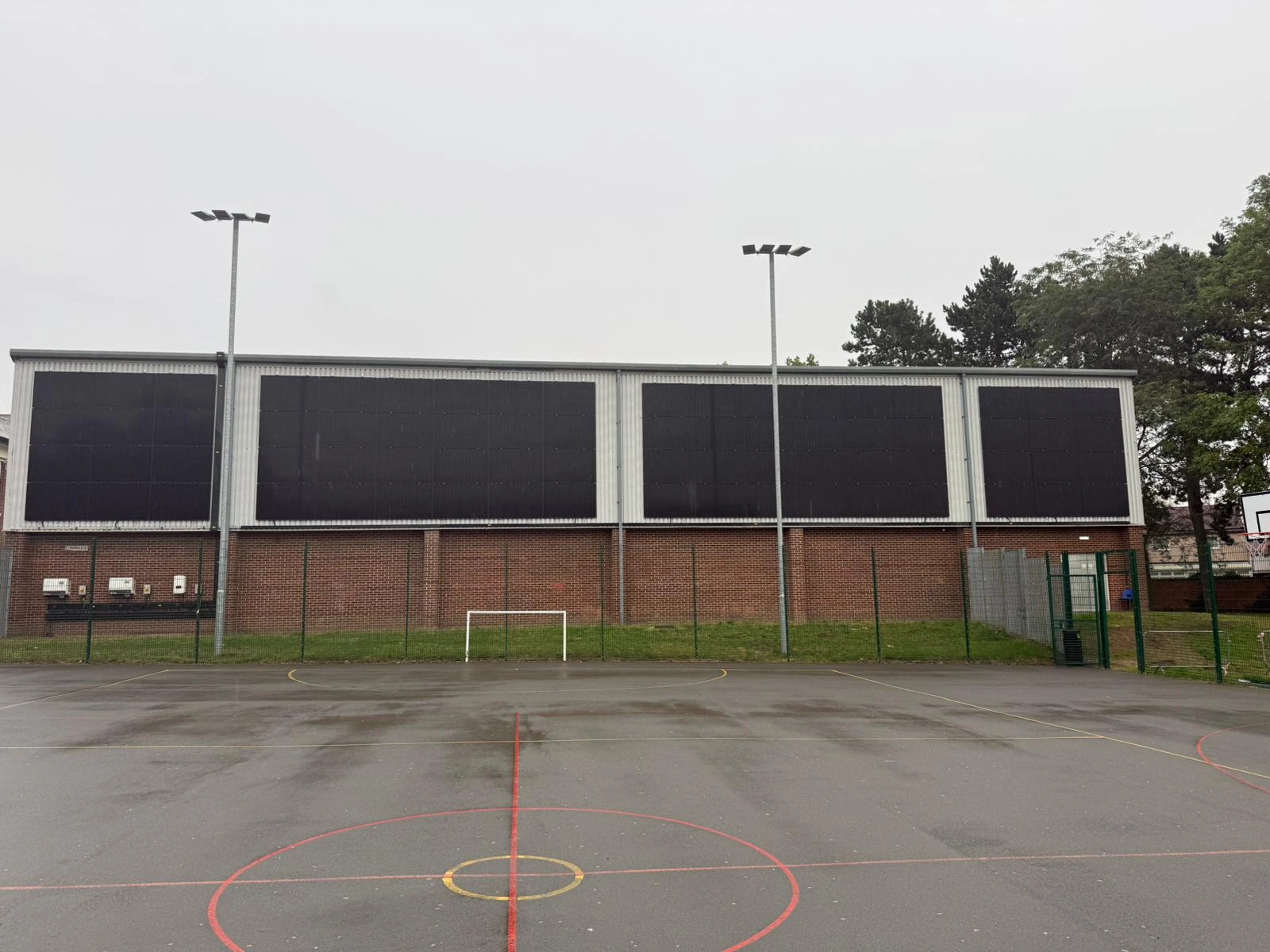
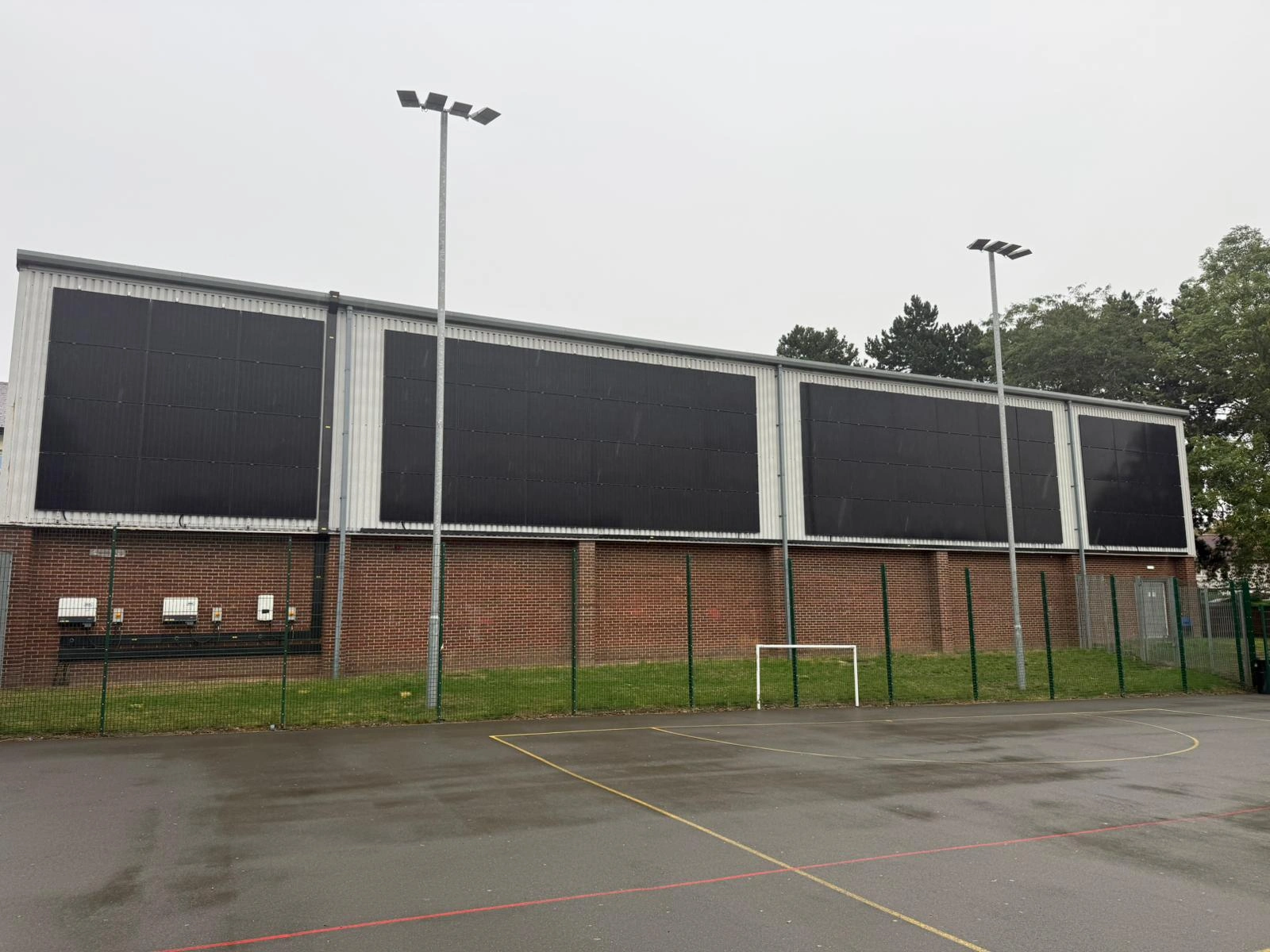
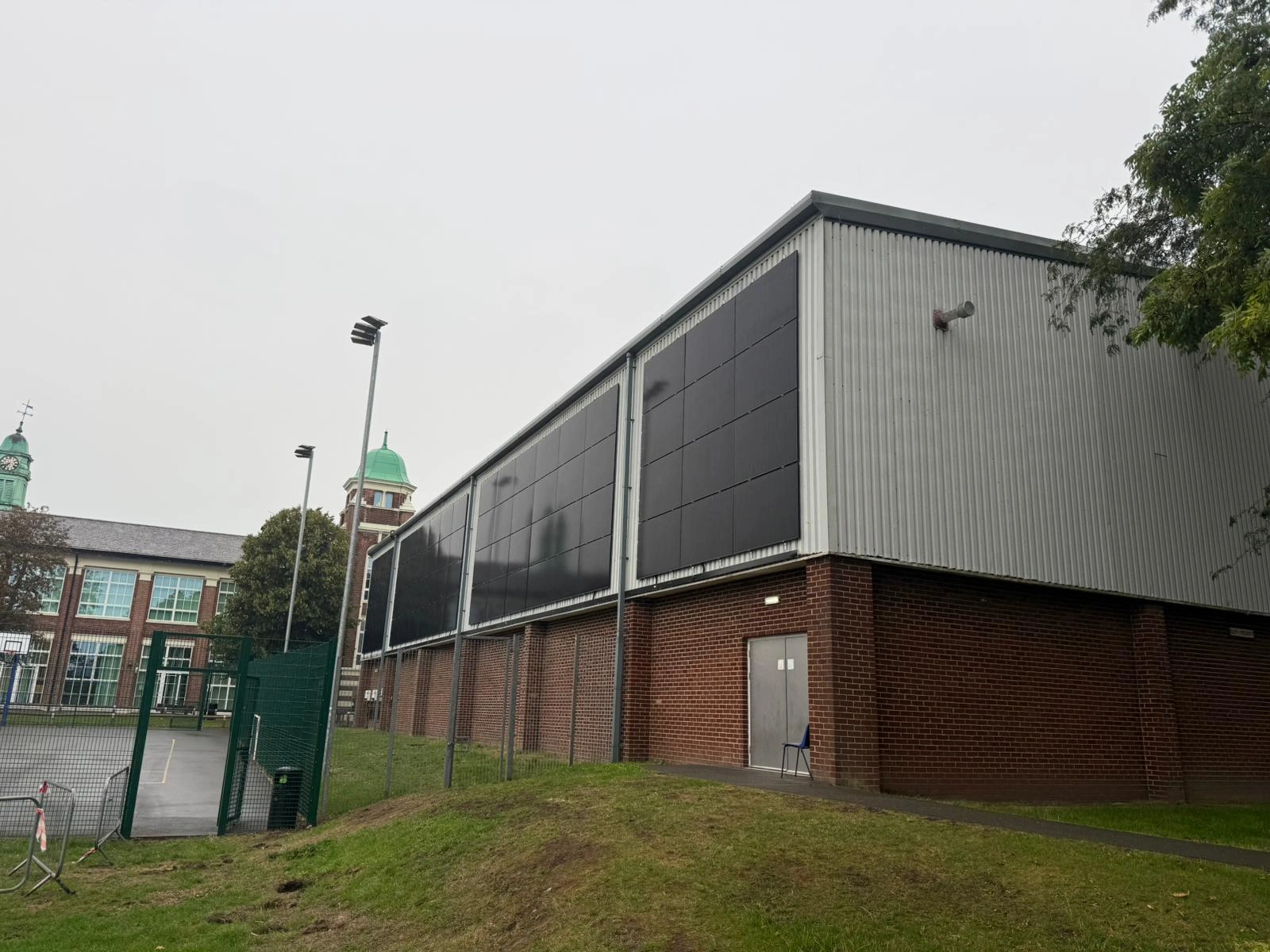
The Deeside PV Facade
Vertical photovoltaic bays running the length of the upper elevation, overlooking the outdoor courts.
What the Facade Delivers
Generation From a Dead Surface
A large elevation that previously produced nothing now generates electricity for the building beneath it.
Strong Winter Performance
Vertical panels catch low winter sun far more directly than a pitched roof — matching the building's darkest, highest-demand months.
Roof Left Free
Rooftop plant, rooflights and future maintenance access are all untouched, because the generation sits on the wall.
Visible Commitment
Unlike a roof array nobody ever sees, a facade is in plain view — renewable investment that demonstrates itself to every visitor.
How a PV Facade Works
A photovoltaic facade is building-integrated PV: the panels are mounted vertically as part of the wall, generating electricity while forming part of the building envelope. It is the same underlying technology as a rooftop array, applied to a different plane.
The trade-off is honest. Across a full year a vertical facade in the UK produces less than an optimally pitched south-facing roof, because for much of the summer the sun is high overhead and strikes a wall at a shallow angle. What people miss is the other half of that equation: in winter, when the sun sits low, a vertical surface receives sunlight far more directly than a pitched roof does — and winter is precisely when most buildings consume the most energy.
Facades also shed snow, never pond water, self-clean more readily in rain, and stay cooler than roof arrays, which marginally improves panel efficiency. For buildings with constrained roofs, heavy winter loads or a genuine interest in making sustainability visible, the case is strong.
MARA Electrical install PV facades alongside conventional rooftop, in-roof and solar canopy systems. If the roof is ruled out at your site, there is almost always another surface worth assessing.
Solar Installers on Deeside's Doorstep
This project sits a few miles from our own base in Queensferry on Deeside. We work constantly across this corner of Flintshire — Shotton, Connah's Quay, Garden City, Sealand, Hawarden, Broughton and Deeside Industrial Park — with Chester around eight miles east along the A548 and A494.
Schools, leisure centres, sports halls and public buildings across Flintshire and Cheshire face the same combination: rising energy costs, net zero commitments they have to evidence, and buildings that were never designed with solar in mind. A facade is frequently the option nobody has put in front of them.
We are MCS certified solar installers, NICEIC approved electrical contractors and an OZEV approved EV charger installer, with more than 21MWp of solar delivered since 2010. Browse the full commercial solar portfolio or read about commercial solar panel installation.
Questions About Solar Facades
What is a PV facade?
A PV facade is a building-integrated photovoltaic system in which solar panels are mounted vertically on the wall of a building instead of on the roof. The panels generate electricity and form part of the building envelope, so the facade does two jobs at once. MARA Electrical install PV facades across Deeside, Chester, Flintshire and North Wales.
Do vertical solar panels actually work in the UK?
Yes. A vertical PV facade produces less over a full year than an optimally pitched roof array, but it performs strongly in winter when the sun sits low in the sky and strikes vertical surfaces more directly. That makes facade PV well suited to buildings with high winter demand, such as sports halls, schools and leisure centres.
Why choose a PV facade instead of roof-mounted solar?
A PV facade is the answer when the roof is unavailable — already covered in plant, structurally limited, shaded, or simply too small for the building's energy demand. Facades also make the renewable investment visible, which matters to schools, public buildings and organisations reporting on net zero.
Who installed this PV facade in Deeside?
MARA Electrical installed this PV facade in Deeside. MARA Electrical are MCS certified solar installers and NICEIC approved electrical contractors based in Queensferry, Deeside, serving Chester, Flintshire, Wrexham and North Wales, with over 21MWp of solar installed since 2010.
Does MARA Electrical install PV facades on schools and leisure centres?
Yes. This installation was carried out on a sports and leisure building. Vertical building-integrated PV suits education, leisure and public sector buildings particularly well because their heating, lighting and ventilation demand is highest in winter, when facade generation is at its best.
Other Building-Integrated Solar
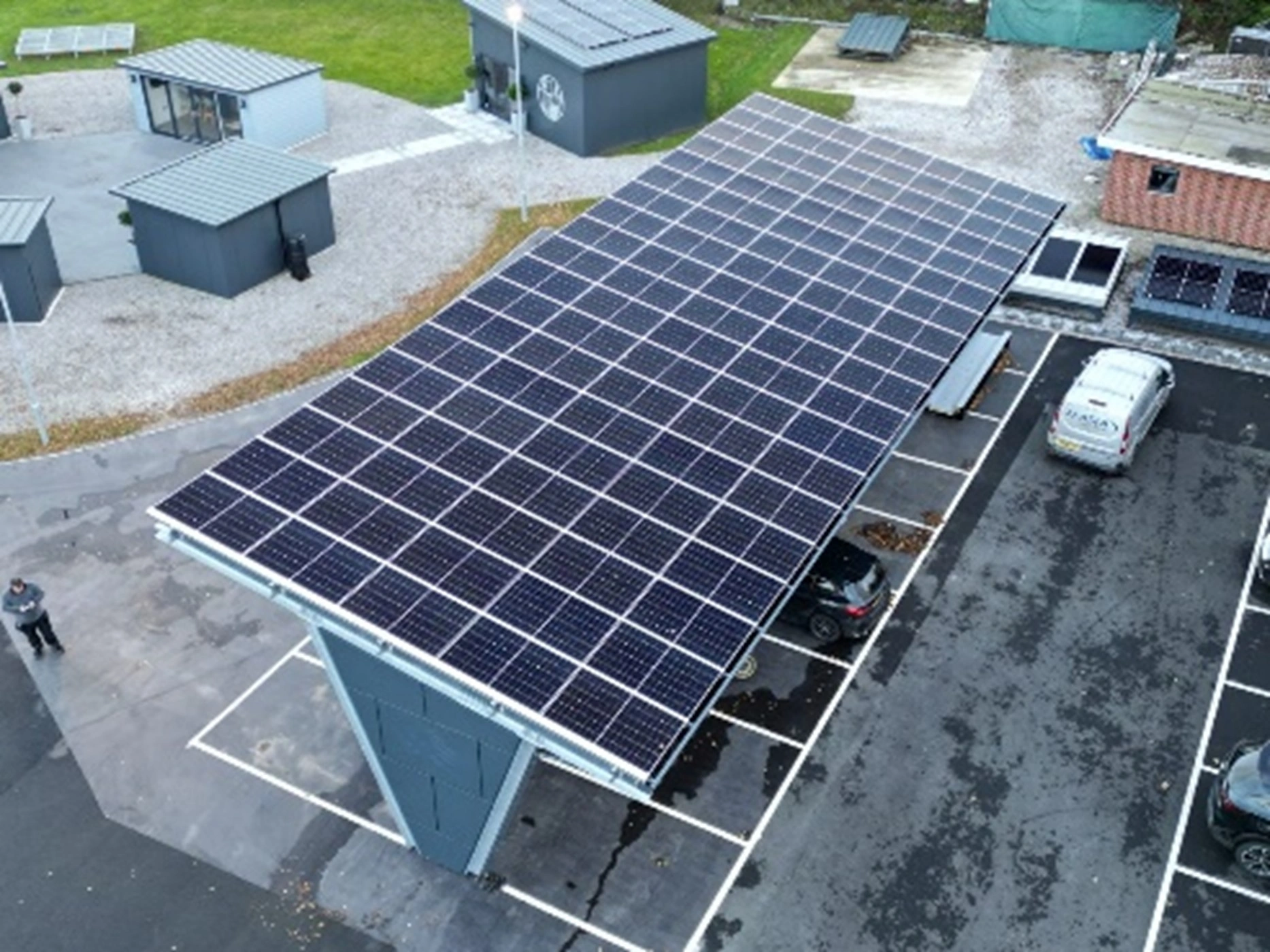 41.85kWp · £10k
Kingspan Power Canopy
41.85kWp of solar PV integrated into a canopy structure, with under-canopy amenity and feature lighting.
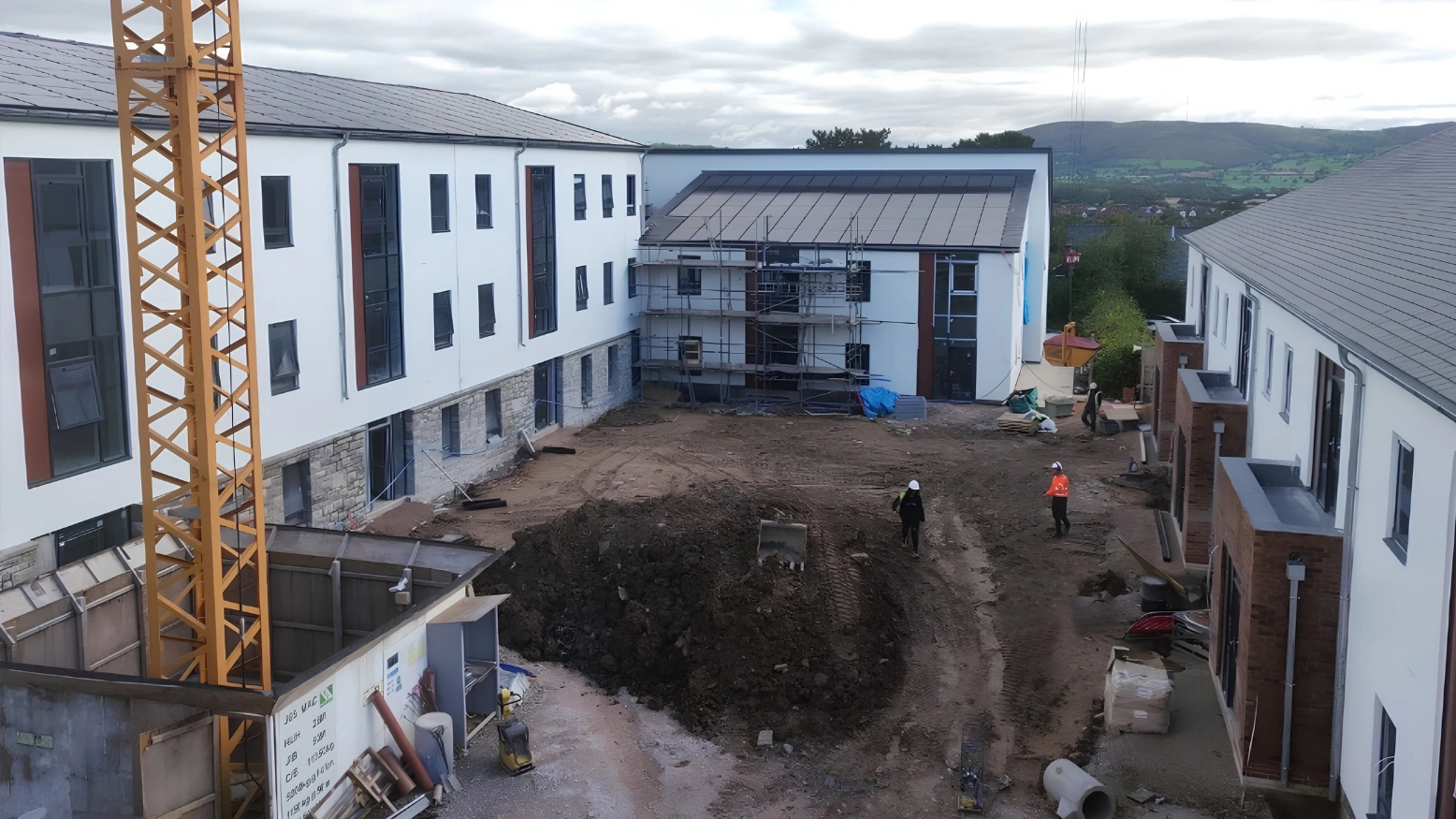 250 kWp · in-roof
250kWp In-Roof PV, Pentre Canol
In-roof photovoltaics in the Vale of Clwyd — panels forming the roof surface rather than sitting on it.
Roof Ruled Out? Look at the Walls
PV facades, in-roof systems, canopies and conventional rooftop arrays — we survey the whole building, not just the roof. MCS certified and NICEIC approved solar installers serving Deeside, Chester, Wrexham, Flintshire and North Wales.
or email solar@mara.uk.com · see all solar projects